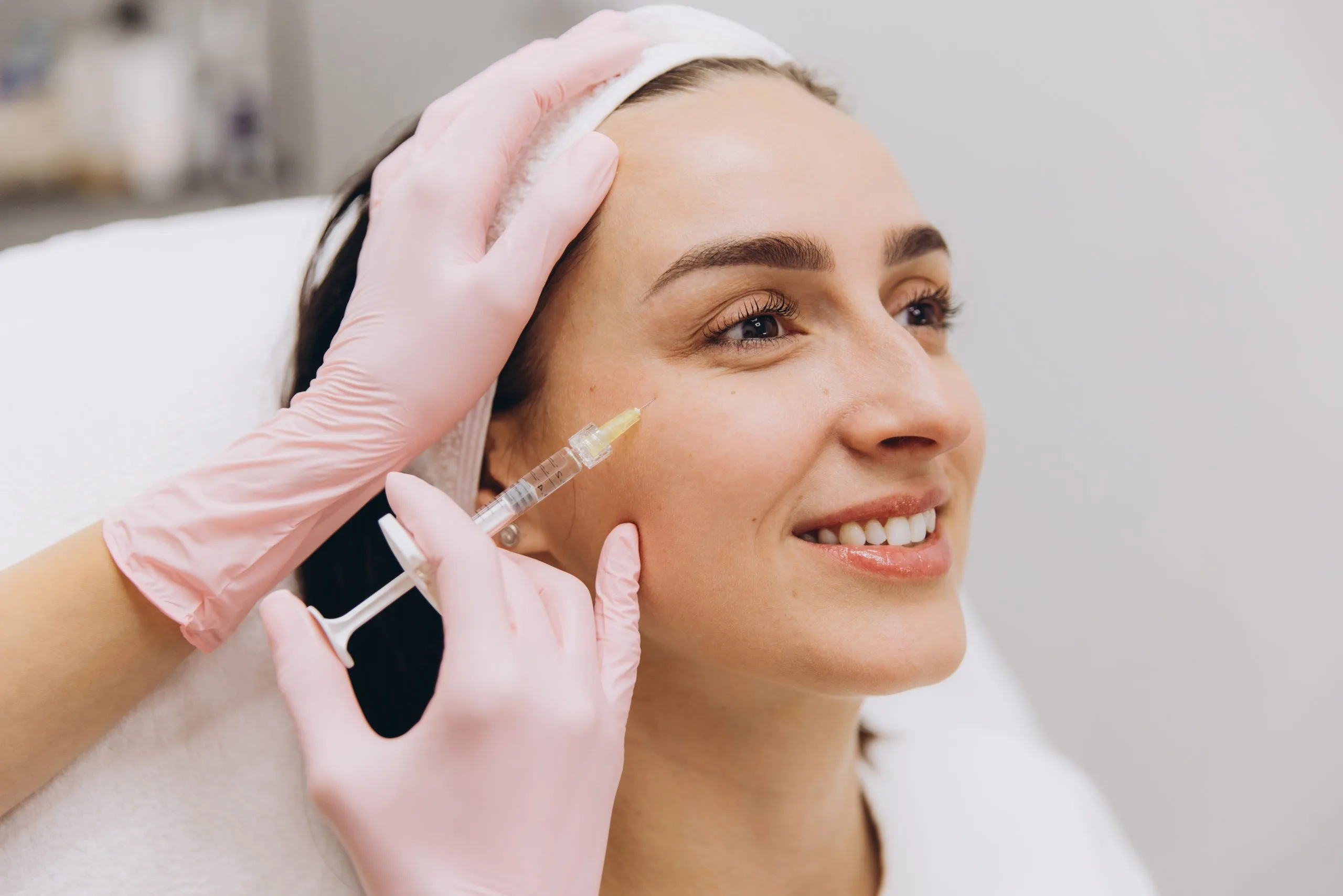
Regenerative aesthetics is a branch of cosmetic medicine that improves your appearance by helping your own tissue repair and rebuild itself, rather than simply covering up or filling in age-related changes. Instead of relying only on products that sit on the skin, these treatments use cells, growth factors, and biological signals – often taken from your own body – to encourage new collagen, better blood supply, and healthier skin over time.
Understanding Regenerative Aesthetics
Every cell in your body is constantly dividing to form new cells, and eventually those cells age and die. Stem cells act as your body’s natural repair system, regenerating the cells that make up tissue. Regenerative aesthetics applies that biological principle to the face, scalp, neck, chest, and hands.The goal is not to freeze a muscle or add volume from a syringe of synthetic material. The goal is to change the quality of the tissue itself – thicker dermis, more collagen and elastin, better hydration, improved blood flow, and healthier hair follicles.Traditional cosmetic treatments ask, “What can we add or relax to make this look better today?” Regenerative aesthetics asks, “What can we stimulate so this tissue behaves more like it did ten years ago?”
How Regenerative Aesthetics Differs from Traditional Aesthetics
Traditional aesthetic medicine is built on predictable tools. Neurotoxins such as Botox, Xeomin, and Daxxify relax the muscles that crease the skin. Hyaluronic acid fillers like Juvederm restore lost volume. These treatments work, and our team offers all of them.The difference is mechanism and timeline:
- Traditional injectables produce results quickly, often within days, and last a defined period before the product metabolizes.
- Regenerative treatments produce results slowly, usually over eight to sixteen weeks, because the body has to actually build new tissue – new collagen and elastin, reactivated hair follicles, healthier dermis.
Two more practical distinctions:
- Layering, not either/or. Many patients use a biostimulator or PRP procedures to improve skin quality, then continue with a neurotoxin for expression lines. These categories address different problems.
- Scope. Because regenerative aesthetics works at the cellular level, its applications reach beyond wrinkles into hair thinning, scarring, texture, sexual wellness, and joint comfort – all areas Regeneris Medical treats.
How Regenerative Aesthetics Works
Adult stem cells are known as “progenitor” cells. They stay dormant until they detect tissue injury or degeneration, which activates them. Once activated, they migrate toward the area of need, transform into new specialized cells, and release growth factors and signaling proteins.Those signals instruct surrounding tissue to:
- Build new collagen and elastin for firmer, more elastic skin
- Form new blood vessels, improving circulation and nutrient delivery
- Reduce inflammation
- Recruit other local repair cells to the area
There is a catch: these cells can only do that work when released from their source tissue and free to travel. In Regeneris Medical’s protocols, that source is adipose (fat) tissue – a rich, easily accessible reservoir harvested in a minor office-based procedure.Regenerative aesthetics uses two broad strategies built on this biology:
- Deliver repair signals directly. Platelet-rich plasma, platelet-rich fibrin, exosomes, and stromal vascular fraction concentrate biological messengers – growth factors, cytokines, and in some cases the cells themselves – and place them where you want new tissue.
- Create a controlled healing response. Microneedling, radiofrequency microneedling, fractional lasers, chemical peels, and biostimulator injections create precise, tiny areas of injury or foreign-body stimulation, prompting fresh collagen production.
Many protocols combine both. A microneedling pass creates thousands of microchannels; PRP or exosomes applied into those channels give the healing cascade a stronger set of instructions.
Activating Beauty from Within
“Beauty from within” gets used loosely, but here it is literal. The material doing the work is often drawn from your own blood or fat, processed in the office, and returned to you the same visit.That has real consequences:
- Compatibility. Autologous material – from your own body – does not carry the compatibility or rejection questions foreign substances can.
- Gradual change. Because you are building tissue, results appear over weeks. Friends notice you look rested rather than “done.”
- Cumulative benefit. A series often produces more improvement than a single session, as each visit adds another layer of collagen deposition.
- Broad effect. One treatment often improves tone, texture, pore appearance, and fine lines at once.
The limitation is equally real: regenerative treatments are not instant, and they do not replace surgery when significant tissue laxity or excess is the problem. Honest planning matters more than enthusiasm.
Is Regenerative Aesthetics Anti-Aging?
It is more accurate to call it pro-repair or healthy aging than anti-aging. Aging is the gradual loss of collagen, elastin, fat volume, bone support, vascular density, and cellular turnover. Regenerative aesthetics targets several of those layers at once.
What it can realistically improve:- Skin thickness and firmness
- Fine lines and crepey texture
- Overall tone and radiance
- Acne scarring and some surgical scars
- Hair density in thinning areas
- Under-eye hollowing and dark circles in appropriate candidates
- Skin quality on the neck, chest, and hands
What it does not do on its own: eliminate deep static folds, lift significantly loose skin, or replace substantial lost facial volume. Those goals may call for surgical or volumizing options.
Common Regenerative Aesthetic Treatments
The regenerative category is broad, and not every treatment suits every concern. Below is a simple guide to the treatments most often grouped under this heading, many available through our practices.
Platelet-Rich Plasma (PRP) Therapy
PRP is the entry point for most patients into regenerative aesthetics – it has the longest track record in the category.A small volume of blood is drawn and spun in a centrifuge to concentrate the platelets, your body’s first responders to injury. That growth-factor-rich concentrate is then applied or injected where new tissue is wanted.Common uses at Regeneris Medspa include:
- Regeneris Revive Gold for skin quality, fine lines, and under-eye texture
- PRP For Hair Loss, alone or paired with hair restoration procedures
- Regeneris Revive Silver Facial, sometimes called a Vampire Facial
- Regeneris Revive Diamond, a facial rejuvenation protocol
- HD PRP, used to support skin healing
PRP is typically done as a series – often three sessions spaced roughly a month apart – with results building over several months.
Platelet-Rich Fibrin (PRF) Injections
PRF is PRP’s next-generation cousin. The blood is spun at a lower speed and without anticoagulants, which leaves more white blood cells and stem cells in the final product and allows a fibrin scaffold to form.That scaffold matters. Instead of releasing growth factors all at once, PRF releases them slowly over about a week for a more sustained stimulus. It is often chosen for delicate areas such as the under-eye region, and for patients who prefer nothing added to the blood at all.
Exosome Treatments
Exosomes are microscopic vesicles that cells release to communicate with one another. They carry proteins, lipids, and nucleic acids that tell nearby cells what to do – including instructions related to repair, collagen production, and reduced inflammation.
- Most commonly applied topically after microneedling or a fractional laser opens microchannels in the skin
- Available as an Exosome Add-On (15 minutes) at Regeneris Medspa to amplify other treatments
- Also used in scalp protocols alongside hair restoration work
The appeal: exosomes deliver signaling without requiring a blood draw, making them a convenient partner to energy-based and needle-based treatments.
Polynucleotides
Polynucleotides are purified DNA fragments – long chains of the building blocks of DNA – used as a skin-conditioning injectable. Rather than adding volume, they act as a biostimulant, providing raw materials for cellular repair while supporting fibroblast activity, hydration, and antioxidant defense.They are most associated with thin, dehydrated, or crepey skin, particularly in areas difficult to treat with traditional filler, such as the under-eye and neck. Polynucleotides are usually given as a short series. Because product availability in this category varies, ask during a consultation which biostimulating injectables are currently offered.
Stromal Vascular Fraction (SVF)
Stromal vascular fraction is one of the most powerful regenerative options available, and it sits at the center of Regeneris Medical’s work.SVF is the cell-rich portion isolated from adipose (fat) tissue. After a minor fat collection procedure, the sample is processed to separate the stromal vascular fraction, which contains adipose-derived stem cells, progenitor cells, growth factors, and other supportive cell types. It is then injected to promote profound regeneration in skin, joints, or other tissues.
Biostimulators and Threads
Biostimulators are injectable materials that do not primarily add volume on day one. Instead, they provoke a controlled response from your fibroblasts, which then produce collagen over the following months. Threads work on a similar principle – the suture material stimulates collagen along its path while providing some repositioning effect.
Poly-L-Lactic Acid
Poly-L-lactic acid (PLLA) is a synthetic, absorbable polymer used in medicine for decades in sutures and implants. Injected into the deeper layers of skin, it triggers a gradual fibroblast response that builds collagen over roughly three to six months.PLLA is typically given in a series of sessions spaced several weeks apart. It suits broad areas of diffuse volume loss and skin thinning – temples, cheeks, lower face – rather than sharply defined lines. Results emerge slowly, which is exactly the point for patients who want change nobody can pinpoint.
Calcium Hydroxyapatite
Calcium hydroxyapatite (CaHA) – sold as
Radiesse and offered at Regeneris Medspa – is a mineral-based injectable of calcium microspheres suspended in a gel carrier. The gel provides immediate structural support; as it absorbs, the microspheres stimulate ongoing collagen and elastin production for long-lasting structure.CaHA can be used at full strength along the jawline and mid-face, or diluted and spread thinly to improve skin quality on the neck, chest, and backs of the hands – making it a frequent choice for Hand Rejuvenation and crepey skin.
Microneedling and RF Microneedling
- Microneedling uses fine needles to create thousands of controlled microchannels in the skin. Each channel is a small, precise injury that the body responds to with new collagen and elastin. It is straightforward, well tolerated, and pairs beautifully with PRP or exosomes, which penetrate deeper through the freshly opened channels.
- RF microneedling – offered at Regeneris Medspa on the Genius platform – delivers radiofrequency energy through insulated needles at a set depth. That energy heats the deeper dermis for both immediate tissue contraction and a stronger long-term collagen response, while the surface layer stays comparatively protected.
Non-Ablative Laser Treatments
Non-ablative lasers heat the dermis to stimulate fibroblasts and collagen while leaving the outer skin layer intact – far less downtime than traditional ablative resurfacing. Regeneris Medspa’s laser menu includes:
- LaseMD
- Laser Genesis
- Hollywood Spectra
- Keralase, which combines laser energy with topical delivery – a natural fit for the regenerative model, since the laser both stimulates tissue and creates pathways for topical actives
Chemical Peels
Chemical peels are the oldest treatment on this list and still one of the most useful. A chemical solution removes the outer layers of skin in a controlled way, prompting regeneration of a fresher surface and, at medium depths, collagen remodeling below. Peels remain practical for tone, pigmentation, and mild texture concerns, and are frequently used to maintain results between more intensive sessions.
Benefits of Regenerative Aesthetics
Scalp thinning is a real but conditional side effect. It’s not universal, and it doesn’t affect every man on therapy – it primarily affects men already destined for male pattern baldness.
- Natural-looking results. The improvement is built from your own collagen and tissue, so there is no obvious “treated” look.
- Improved skin quality, not just contour. Filler restores shape but does not make thin skin thicker. Regenerative treatments improve texture, elasticity, and thickness.
- Results that keep developing. Collagen production continues for weeks or months, so skin often looks better at week twelve than week four – and new tissue can last for years.
- Minimal downtime for most options. Carbon facials have no downtime at all; microneedling and PRP typically involve a day or two of redness.
- Applications well beyond the face. Hair, scalp, neck, chest, hands, joints, and sexual wellness all fall within the regenerative umbrella.
- A foundation for other treatments. Healthier tissue responds better to lasers, injectables, and surgical procedures alike.
Applications in Aesthetic Medicine
Across the Regeneris Medical brands, regenerative principles show up in several distinct areas:
- Facial rejuvenation
- Hair restoration
- Body and breast
- Sexual wellness
- Skin and scar treatment
The Bottom Line
Regenerative aesthetics takes a different approach to healthy aging by working with the body’s own repair processes to improve tissue quality over time. From PRP and PRF to biostimulators, microneedling, lasers, and other regenerative treatments, the goal is to encourage healthier collagen, elasticity, circulation, and overall skin quality rather than simply masking the signs of aging.While these treatments are not a replacement for surgery or traditional aesthetics in every situation, they can be a valuable part of a personalized treatment plan for achieving gradual, natural-looking results. The right approach depends on your goals, skin and tissue health, and individual needs, making a professional consultation an important first step.